

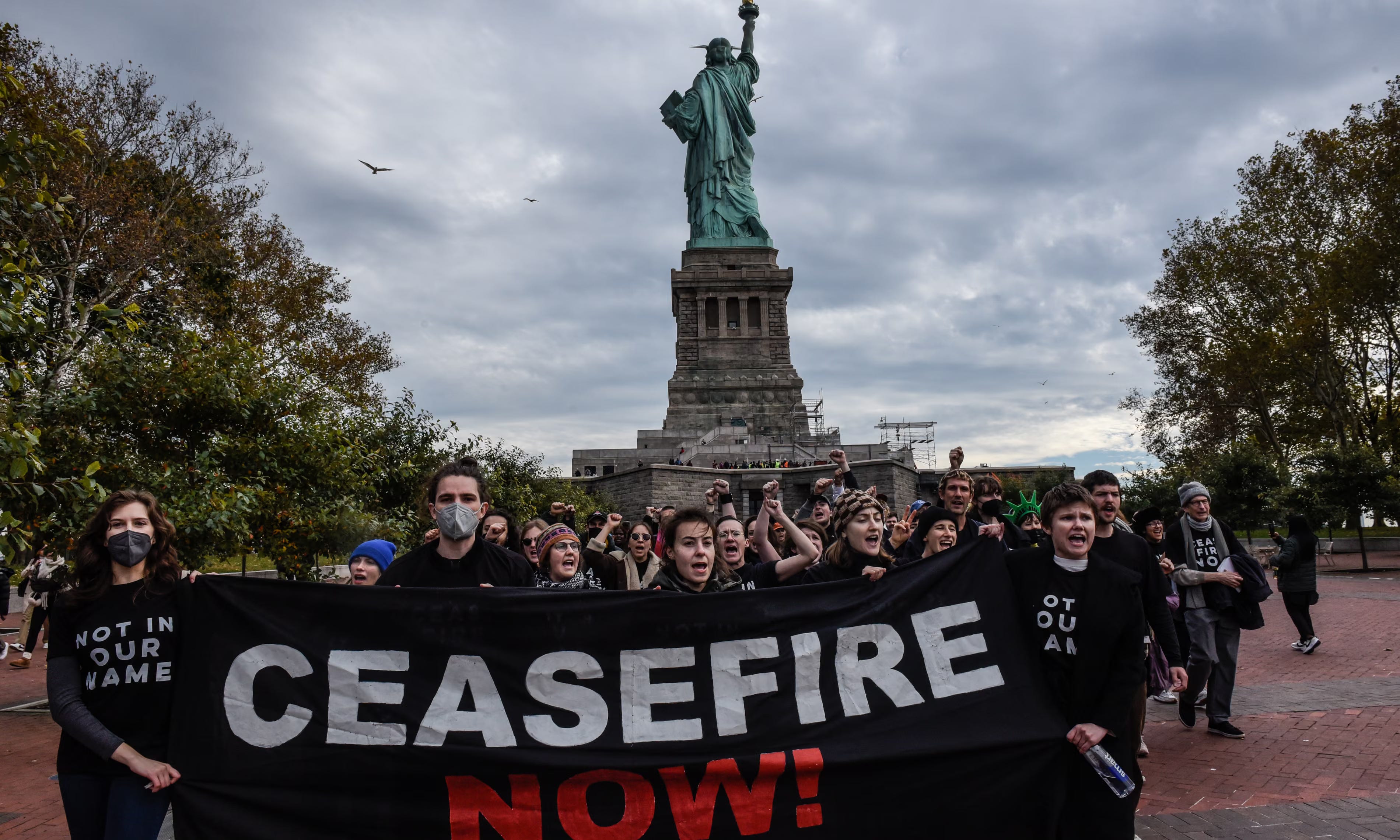
A temporary ceasefire was reached last week. But since then, we have received several signs that it might just be that: temporary.
While U.S. Vice President Vance was making a speech announcing that a marathon of negotiations with Iran had failed to produce an agreement, the U.S. president was spending his time in the best possible way: watching a UFC fight.
Vance suggested that after 21 hours of meetings, the U.S. offered its best deal to Iran, but Iran refused it. This was anticipated because several issues remain unresolved. First, Iran has not agreed to fully and immediately reopen the Strait of Hormuz. It wants to create a system that allows it to charge vessels entering the Strait.
The United States, of course, refused. What is interesting is that in a recent conversation with a friend, he explained how the Strait is not technically closed. He argued that Iran does not have the capacity to stop the ships passing through it, and if they were going to stop or attack one, it would be one out of hundreds. However, insurance companies have made their premiums so high that no one is willing to pay. Obviously, some of these ships also simply do not want to take the risk of being that “one” ship.
Another disagreement: Trump demands that Iran hand over its entire stockpile of enriched uranium. Iran refused. Finally, Iran also wanted to include Lebanon in the ceasefire — as I argued in last week’s piece — but the U.S. refused, treating it as an Israeli security matter. I expect more negotiations to follow, but that depends on the United States’ willingness to decouple its demands from Israel’s. This is especially important since Benjamin Netanyahu has not gained enough politically to sway the upcoming elections in a few months, and has been telling the Israeli public that “the battle is not yet over.” We will have to wait and see.
In Palestine, Israel continued to target and bomb Gaza. Just a few days ago, it targeted Al Jazeera’s correspondent in Gaza, Mohammed Wishah. Israel is also continuing to target Palestinian Christians, including during Holy Saturday in Jerusalem, when restrictions and checkpoints blocked many from reaching the church or the celebrations.
In Lebanon, the government announced a national day of mourning after Israel killed at least 254 people and injured 1,165 in a single day. A single day. 254 souls killed in a single day. As negotiations with Iran continue, I believe Israel will use this time to seize more control over southern Lebanon — the next few weeks may be the worst yet for Lebanon.
Another week: a ceasefire in one place that is broken every day, another that is temporary, and a third that the whole world wants — except Israel.